
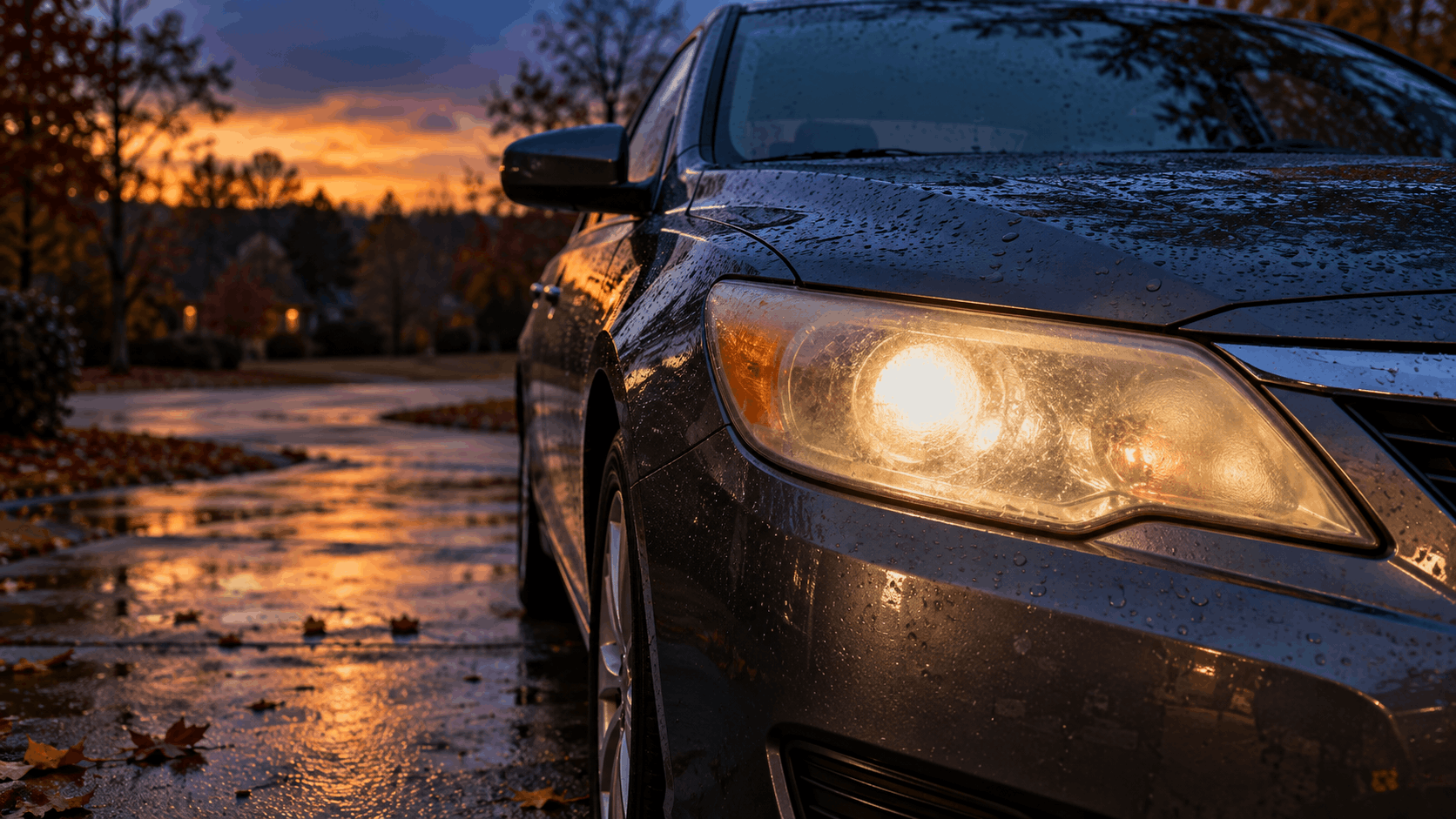
By October, the drive home around Garner can happen in noticeably lower light. If your headlights look yellow or hazy, it may be harder to see the road clearly after sunset or in rain. Many drivers assume the bulbs are the problem, but the plastic lens covering them can also reduce the light that reaches the road.
Why headlights get cloudy
Over time, sun exposure and wear can damage the protective surface of a headlight lens. The clear cover may become dull, yellow, or rough. You can sometimes see the haze in daylight, but its effect matters most when you need the lights. A lens that scatters or blocks light can make road markings, curves, and people at the edge of the roadway harder to spot.
How to tell whether the lenses need attention
Park on level ground and compare both headlights in daylight. Are the covers clear, or do they look milky and yellowed? Then check your low beams against a wall after dark. Look for uneven light and confirm both lamps work. If one side is out, a bulb or another electrical issue may need repair. If the lights work but the outer lenses are visibly cloudy, restoration may improve their output.
What restoration does—and what it cannot do
Headlight restoration removes the weathered surface and helps bring clarity back to the lens. AAA research found that deteriorated lenses can significantly reduce light output and that restoration can improve it. The result depends on the condition of the assembly. Deep damage, moisture inside the housing, a failed bulb, or an electrical fault may call for a different repair or replacement. Restoration is not a substitute for checking the whole lighting system.
Why fall is a good time to look
Shorter days mean more evening driving, including commutes between Garner, Clayton, and nearby Johnston County communities. Rain and glare add to the challenge. Clear lenses, working bulbs, clean windshields, and correctly aimed lights all contribute to visibility. Check high beams and turn signals as well, and avoid using high beams when they could blind another driver. If you frequently drive on roads without streetlights, take a moment on a safe, familiar route to notice how far ahead your low beams actually let you see. A change in visibility can be gradual, so it is easy to miss until the seasons change.
Carolina Quick Lube offers headlight restoration and checks exterior lighting when vehicles come into its bays. If your headlights look cloudy, ask for an assessment before the darker months. Knowing whether the issue is in the lens, bulb, or another part of the system is the first step toward seeing the road more clearly.